There’s a particular kind of silence that happens in my studio when I begin designing a cake like this. Not the absence of sound — but the quiet focus that comes when you know you’re not just building tiers. You’re dressing something. Styling something. Translating fabric into sugar.
Lace and pearls have undeniably returned to the wedding world. But not in the way we remember them. Not stiff. Not predictable. Not overly traditional. They’re back with refinement. With intention. With edge softened by restraint.
And as a cake designer, I couldn’t love it more.
Designing With Fabric in Mind
When I designed this cake, I didn’t start with structure. I started with textiles.
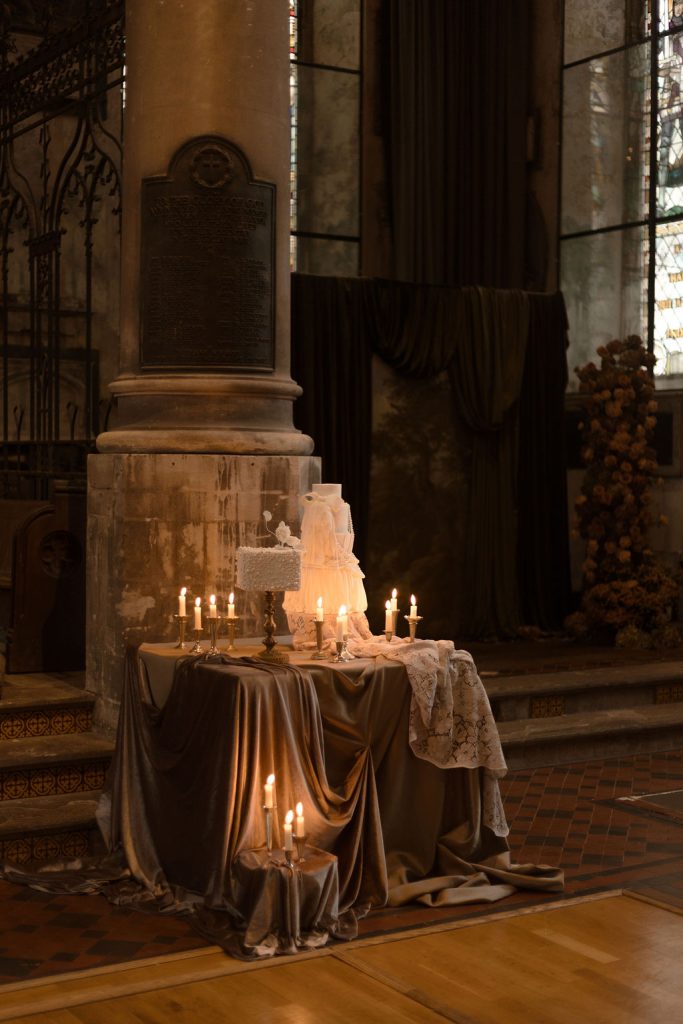
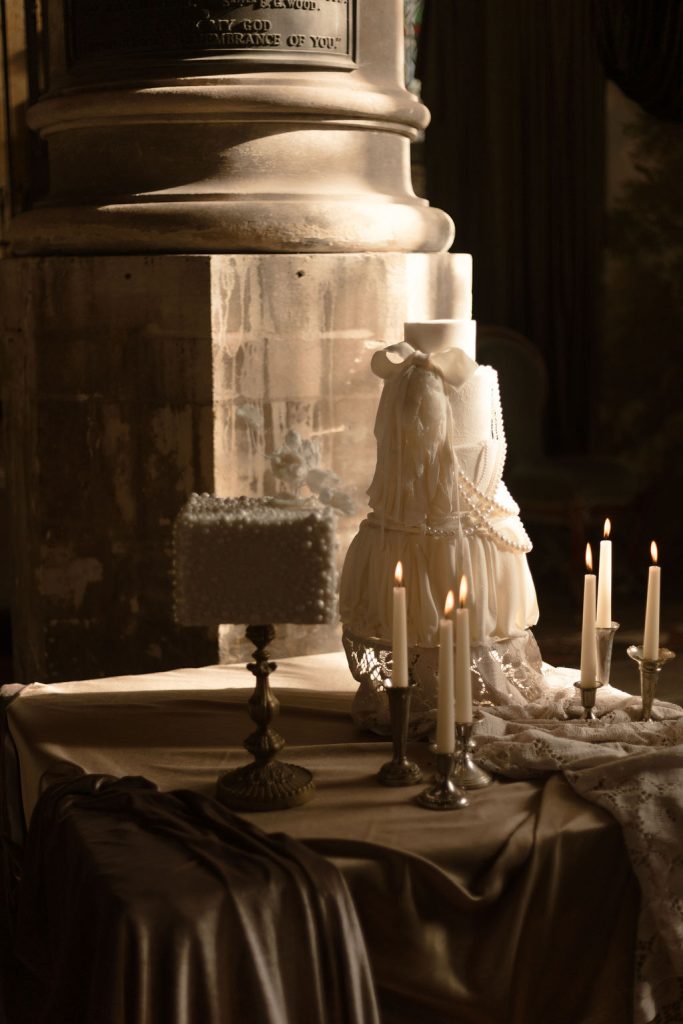
I thought about lace — the way it overlays skin. The way it creates texture without heaviness. The way it tells a story through pattern. Instead of applying thick decorative elements, I pressed delicate lace texture into the sugar paste so it feels embedded, not added. Almost as though the cake was wrapped in fabric rather than covered in icing.
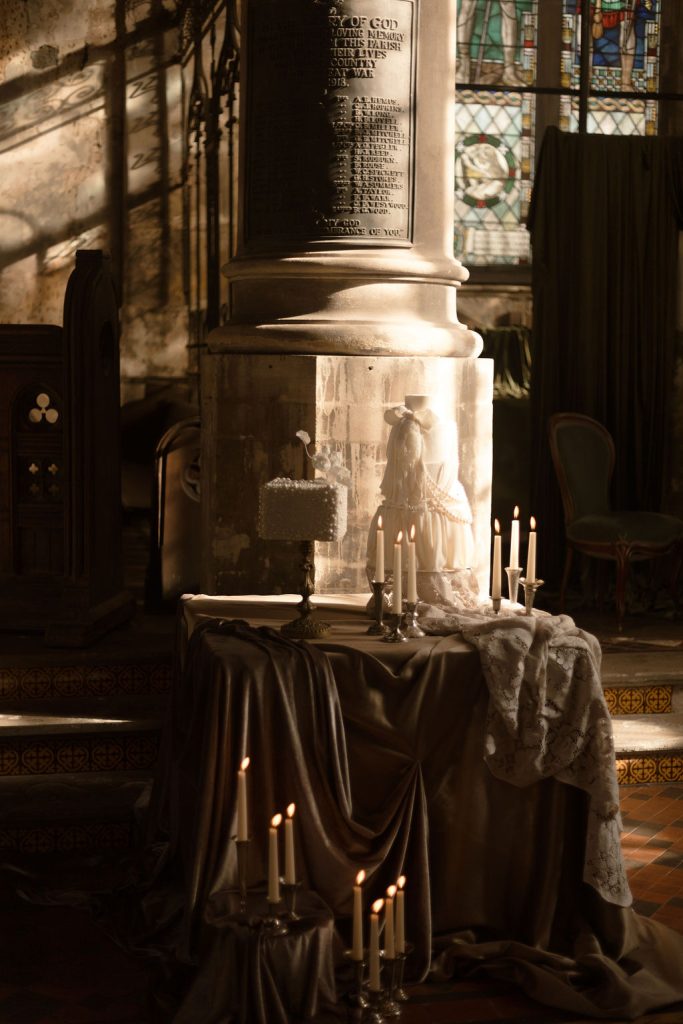
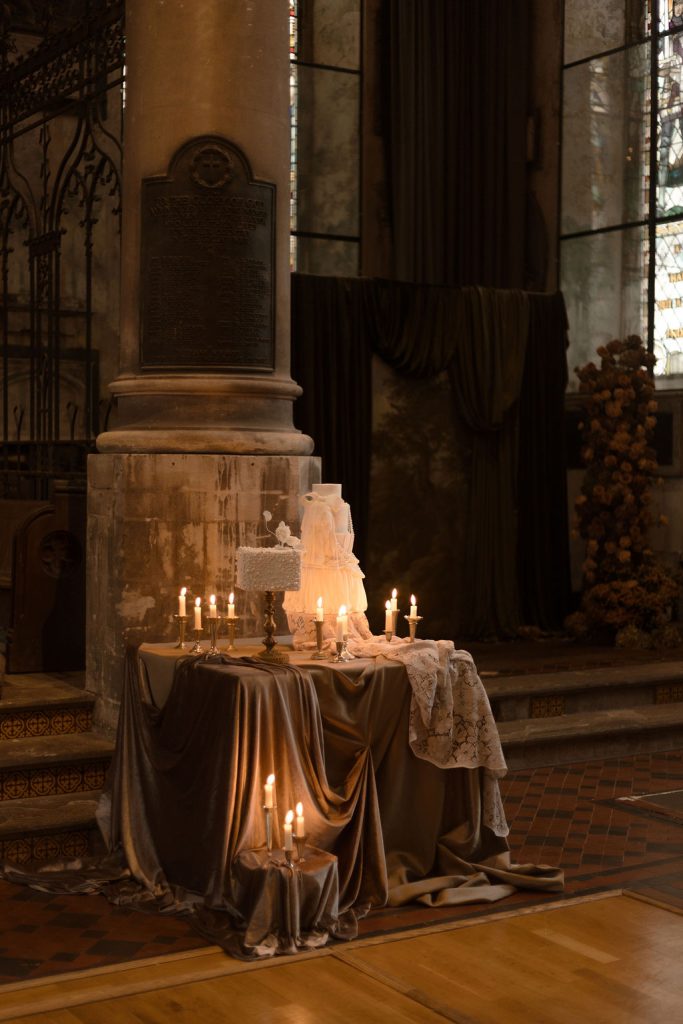
The top tier remains smooth and clean. That decision was deliberate. Only with a delicate lace pattern.
Modern elegance needs space to breathe.
If every inch is detailed, nothing feels special. The simplicity of the upper tier allows the eye to rest before moving downward into texture and detail. It’s the contrast between minimal and romantic that keeps it current.
Pearls are where things can go wrong — or incredibly right.
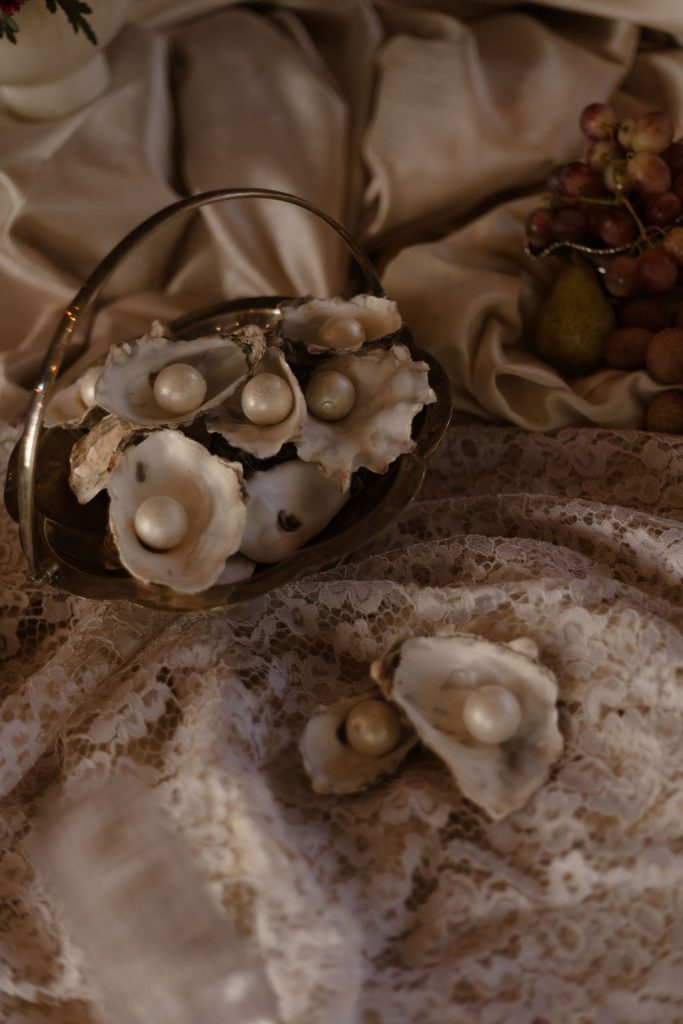
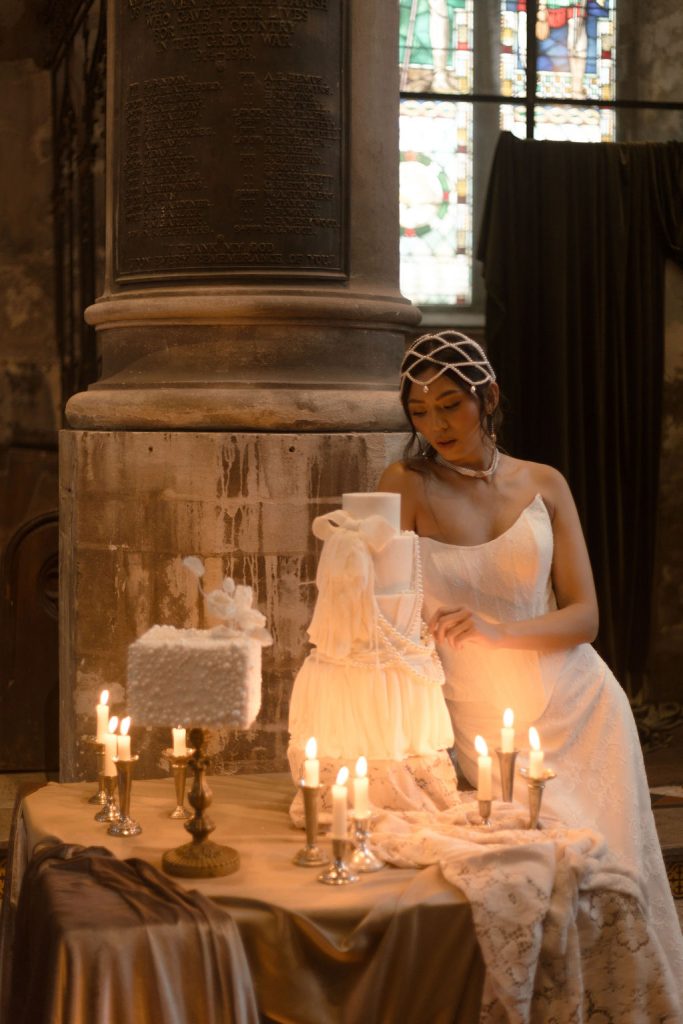
For me, pearls should behave like jewellery. They should drape, fall, catch light. They should feel styled, not scattered. On this cake, they cascade across the tier in soft loops, almost as if placed by hand in the moment. Because they were.
I adjust them the way I would adjust a necklace on a bride. Step back. Shift slightly. Refine the fall. It’s subtle work, but it changes everything.
Under candlelight, pearls soften. They glow rather than shine. And that glow transforms the entire cake from decorative to atmospheric.
One of my favourite details is the draped lower tier.
Sugar can be rigid. Structured. Architectural. But here, I wanted movement — a gathered, flowing “skirt” effect that feels almost like silk caught mid-motion. The folds create shadow and depth, especially in warm lighting, which makes the cake feel alive rather than static.
The bow detail at the shoulder adds softness without becoming overly sweet. It feels tied, not sculpted. Effortless rather than forced.
Movement is essential in romantic design. Without it, lace and pearls risk looking formal. With it, they feel emotional.
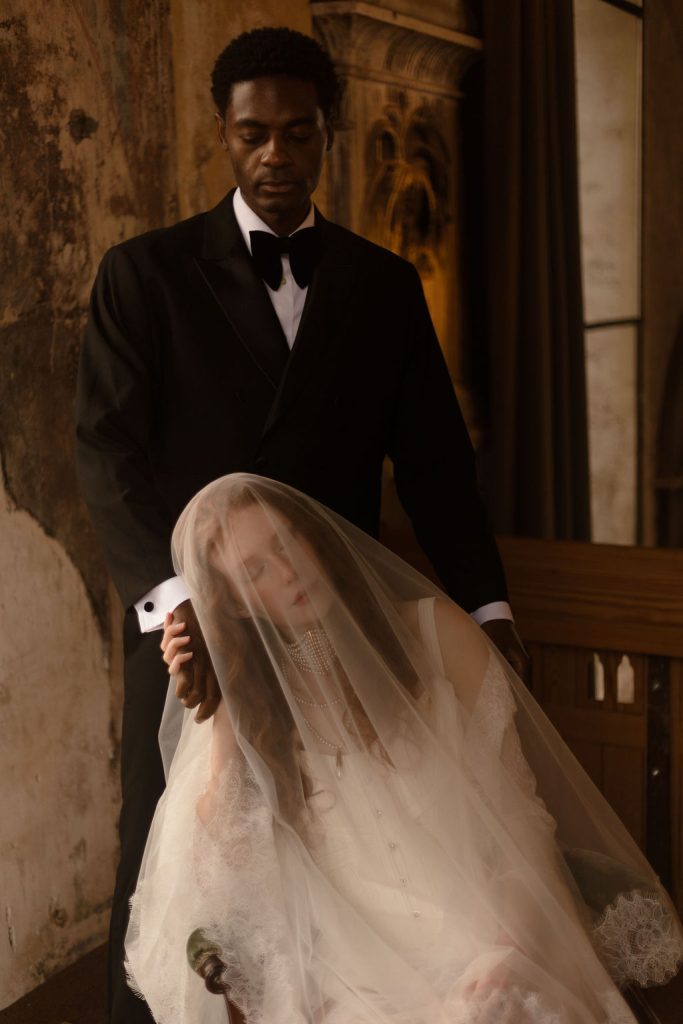
When lace and pearls appear in a wedding, they rarely exist in isolation.
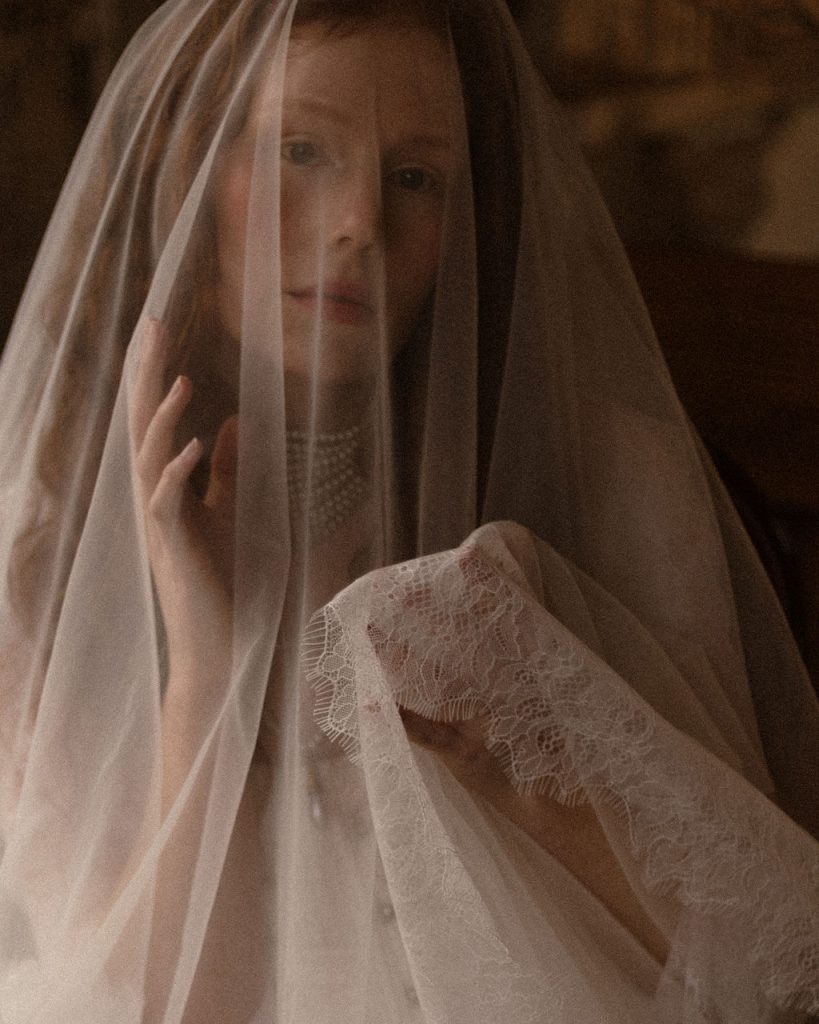
They’re in the veil. In the gown. In heirloom jewellery. Sometimes even in the tablescape.
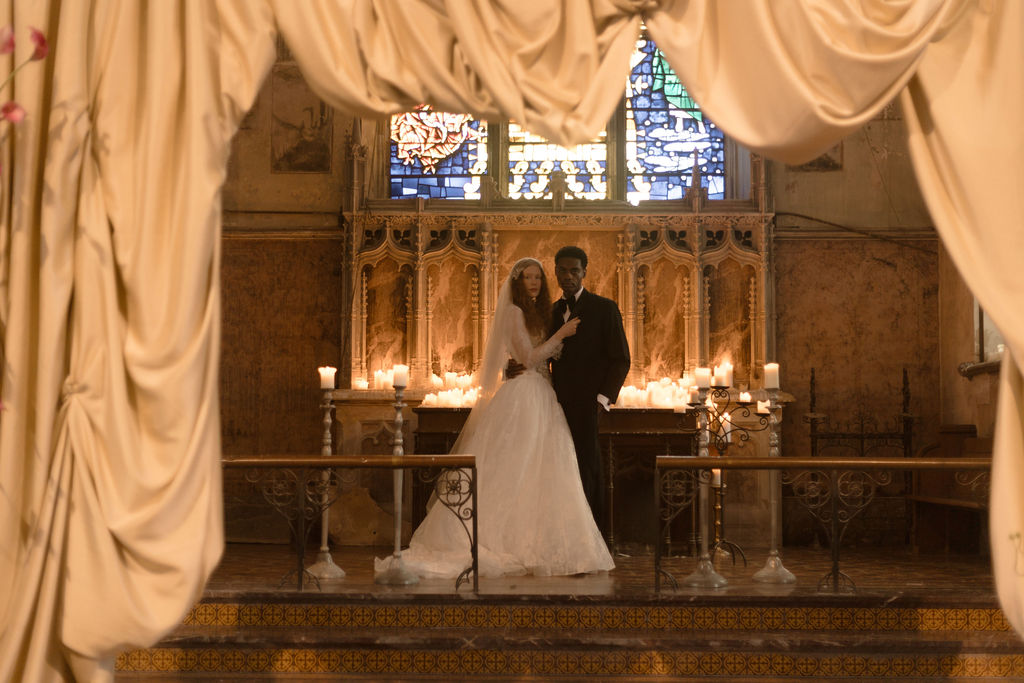
As a designer, I see the cake as part of that conversation. The lace pressed into sugar mirrors the bride’s gown without copying it. The pearls echo her jewellery without competing. The ivory tones reflect candlelight rather than fighting against it.
A wedding cake should never overpower the bride. It should feel like it belongs in her world.
After years dominated by sharp edges, monochrome palettes, and ultra-minimal design, there’s something refreshing about reintroducing softness.
But the difference now is editing.
We aren’t recreating vintage cakes from decades past. We’re extracting the essence — texture, detail, craftsmanship — and pairing it with modern silhouettes and intentional restraint.
The result?
Romance without excess.
Tradition without heaviness.
Detail without clutter.
That balance is where contemporary elegance lives.
Lace and pearls aren’t about nostalgia.
They’re about storytelling. About translating heirloom detail into something fleeting and edible. About allowing softness back into modern design — but with intention.
And as a cake designer, that balance between structure and romance is exactly where I feel at home.